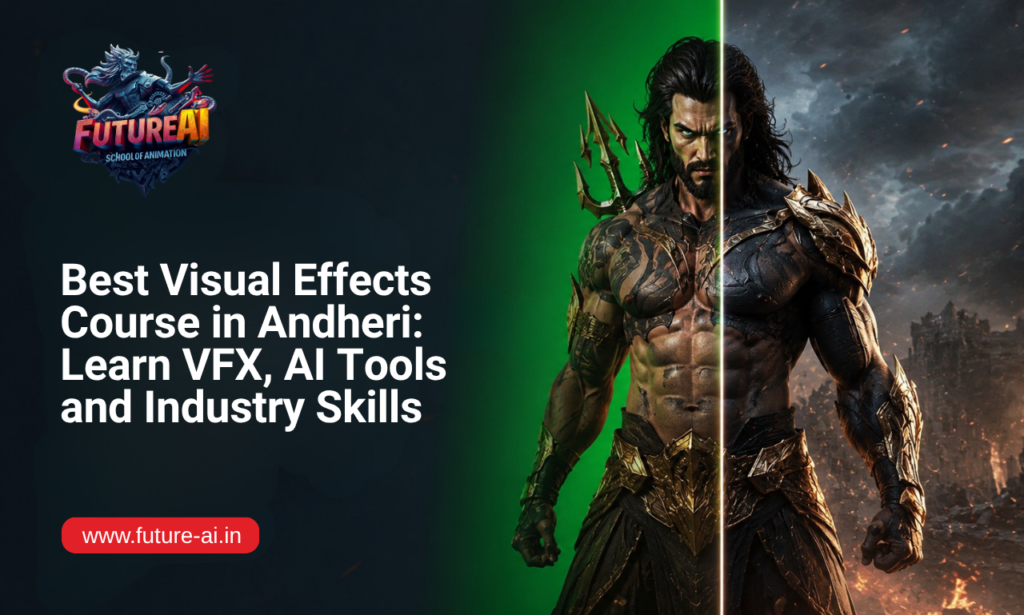
The way visual stories are produced has changed dramatically. Audiences today regularly watch impossible worlds, futuristic cities, realistic creatures, large-scale destruction, digitally created environments and seamless transformations without thinking about how those visuals were made. Behind many of these scenes is a team of visual effects professionals combining technology, observation and creative thinking.
VFX is also no longer restricted to blockbuster cinema. Advertising agencies, OTT platforms, gaming companies, music-video producers, digital agencies and online creators use visual effects to make their content more engaging. This wider adoption has increased interest among students who want to build careers in post-production, compositing, motion graphics, 3D and digital filmmaking.
For students in Mumbai, joining a structured Visual Effects Course in Andheri can provide the foundation needed to understand how professional VFX is created. Instead of learning random software commands, students can follow a planned path covering visual design, cinematography, tracking, compositing, 3D workflows, simulations, post-production and AI-supported production techniques.
Future AI – School of Animation in Andheri West offers a VFX Film Making program designed around creative and production-oriented learning. The program is listed at approximately 18 months across four terms and includes graphics, cinematography, 3D fundamentals, compositing, post-production, motion graphics, Cinema 4D, RealFlow, Houdini and other VFX-related areas.
What Is Visual Effects and Why Is It Important in Modern Filmmaking?
Visual effects, commonly known as VFX, refers to digitally created or modified imagery used to enhance footage captured through a camera. Sometimes VFX makes a small correction, such as removing an unwanted object from a frame. In other cases, it may create complete environments, creatures, explosions or imaginary worlds that could not realistically be filmed.
Modern productions often combine practical filming and digital effects instead of treating them as completely separate processes. An actor may perform on a partially constructed set while artists digitally extend the environment. A car may be filmed on a road while additional vehicles, buildings or atmospheric effects are inserted later. The final result needs to look like everything existed in the same place during filming.
This is why VFX requires much more than knowledge of software. Artists need to understand perspective, lighting, camera movement, colour, depth, composition and storytelling. Every digital element must visually belong inside the shot. Even a technically impressive effect can become distracting if it does not match the original footage.
Students joining a Visual Effects Course in Andheri should therefore expect to learn how images are constructed rather than simply how effects are added. The strongest foundation comes from understanding both the artistic and technical decisions behind every shot.
What Skills Should Students Learn in a Visual Effects Course?
VFX training normally begins with visual fundamentals. Students need to understand design, composition, colour, perspective, framing and storytelling before tackling advanced software. These fundamentals allow artists to make better creative decisions when building or correcting shots.
Once students understand the basics, they can move towards production skills such as rotoscoping, chroma keying, masking, clean-up, tracking and compositing. These techniques are used extensively in professional post-production. For example, rotoscoping can isolate an actor from a background, while camera tracking allows digitally generated elements to move naturally with filmed footage.
Important VFX Skills
A comprehensive program may introduce learners to:
- Visual storytelling and shot planning
- Rotoscoping and masking
- Green-screen keying
- Motion and camera tracking
- Matchmoving
- Matte painting
- Digital clean-up
- Motion graphics
- 2D and 3D compositing
- 3D fundamentals
- Lighting and rendering
- Particle effects
- Fire, smoke and fluid simulations
- Colour correction
- Video editing
- Post-production workflow
- Showreel development
The objective should be to connect these skills rather than teach them as isolated modules. Future AI’s listed VFX curriculum includes graphics, illustration, storytelling, cinematography, 3D fundamentals, compositing, post-production, motion graphics and advanced effects workflows.
Who Can Join a Visual Effects Course After 12th?
VFX can be explored by students after completing Class 12, even if they have never studied animation or filmmaking before. Beginners normally start with basic design, visual understanding and software navigation before moving towards more demanding production tasks.
Students from Arts, Commerce and Science backgrounds can all consider this field. Arts students may already be familiar with creativity, colour and visual communication. Science students may enjoy the technical side of simulations and problem-solving, while Commerce students can develop the required artistic and digital abilities through structured practice.
Academic stream is therefore less important than interest and consistency. Students who enjoy movies, gaming, photography, editing, drawing, digital art or experimenting with visual technology may find VFX particularly engaging. Patience is also important because professional-looking shots often require repeated corrections.
Future AI states that students completing 10th or 12th can explore its creative programs without requiring a specialised technical background. Students considering admission should still confirm the latest eligibility and batch requirements directly with the institute.
Do You Need Drawing, Coding or Technical Knowledge for VFX?
Students sometimes avoid VFX because they believe they need excellent drawing ability. Drawing is useful for developing visual understanding, but it is not compulsory for every visual-effects role. Many professionals work primarily with compositing, tracking, simulations, clean-up, editing or 3D software.
Basic artistic awareness is more important than being a professional illustrator. Students should learn to observe light direction, shadows, colour relationships, perspective and scale. These skills help them decide whether a digitally added element genuinely belongs inside a live-action shot.
Coding is also not mandatory for beginners. Most entry-level learning happens through visual software interfaces. Students can begin with applications used for compositing, animation and effects without writing programming code. As they become more advanced, technical scripting can become helpful in specialised production roles.
Python and similar scripting approaches can support pipeline automation and customised workflows, but students do not need to start there. A beginner should first concentrate on visual fundamentals, software confidence, project execution and problem-solving.
Which Software Should a VFX Student Learn in 2026?
There is no single application that handles every part of a professional VFX pipeline. Different software packages are designed for different tasks, which is why students benefit from understanding how multiple tools can work together.
Adobe After Effects is often used for motion graphics, masking, tracking and compositing. Nuke is strongly associated with node-based compositing and high-end post-production. Maya and 3ds Max can support different 3D production requirements, while Cinema 4D is widely useful for motion design and three-dimensional graphics.
Important Software Categories to Understand
Students may encounter tools associated with:
- Compositing
- Motion graphics
- 3D modelling
- Animation
- Lighting
- Rendering
- Simulations
- Editing
- Digital clean-up
Houdini deserves particular attention for students interested in procedural effects and simulations. It is commonly associated with complex particles, fire, smoke, liquids and destruction. RealFlow can also be introduced for dynamics and fluid-oriented workflows. Future AI’s curriculum references applications including Nuke, After Effects, 3ds Max, V-Ray, Cinema 4D, RealFlow and Houdini across its VFX Film Making structure.
How Is AI Transforming Visual Effects Training in 2026?
Artificial intelligence is becoming increasingly relevant to digital production. Creative applications are introducing AI-assisted features that can help with time-consuming tasks such as masking, object isolation, image generation, concept development, clean-up and certain forms of motion creation.
For VFX students, this change does not mean that conventional skills are becoming unnecessary. In fact, understanding fundamentals becomes even more important when AI is involved. AI may generate a visually attractive result, but an artist still needs to determine whether perspective, lighting, movement, scale and continuity are correct.
An effective AI VFX course should therefore teach students how artificial intelligence can assist an existing production pipeline. Learning only prompts would provide a very limited understanding of professional visual effects. Students still need compositing, cinematography, tracking, 3D, simulations, lighting and post-production knowledge.
The role of the artist is gradually evolving from performing every repetitive task manually to deciding when automation can improve efficiency. Students who understand both VFX fundamentals and AI-assisted workflows may be better prepared to adapt to changing studio requirements.
Why Are Practical Projects Essential for Learning VFX?
Visual effects is learned through execution. Watching an instructor complete a perfect composite may look straightforward, but completing the same task independently exposes the student to many problems. Difficult hair edges, changing lighting, fast movement, camera shake and reflections can make even apparently simple shots challenging.
Projects help students develop problem-solving ability. Instead of asking only which software feature to use, learners begin asking what the shot actually requires. They may need to combine masking, tracking, clean-up, colour correction and compositing to solve a single assignment.
Practical training also introduces professional habits. Students learn how to organise project files, follow instructions, receive feedback, make revisions and meet deadlines. These are important workplace skills because production environments often involve multiple rounds of correction.
Future AI highlights live projects, real VFX shoots and production-style workflows within its learning approach. For anyone comparing a Visual Effects Course in Andheri, the amount and quality of project work should be considered carefully rather than judging the course only by its software list.
Why Does Every VFX Student Need a Strong Showreel?
A showreel is a short collection of an artist’s strongest visual work. For students and freshers, it often plays a more practical role than a certificate because employers can directly judge the quality of the work.
A good student reel could contain compositing, green-screen replacement, roto work, motion tracking, digital clean-up, matte painting, set extension, motion graphics, 3D integration or simulations. Whenever possible, breakdowns can show the original footage followed by the final output so viewers can understand the artist’s contribution.
Students should avoid adding every classroom exercise to their portfolio. Three or four highly polished projects can create a stronger impression than many average pieces. A reel should also reflect the student’s preferred career direction. Someone interested in compositing should not fill the majority of the reel with unrelated modelling exercises.
Mentor review is valuable during this process. Experienced professionals can identify weak shots, recommend improvements and help students present their work more effectively. Future AI’s training positioning includes portfolio and showreel-oriented learning as part of preparing students for creative careers.
What Is the Duration of a Visual Effects Course in Andheri?
Course duration can vary significantly depending on the depth of training. A short program may focus primarily on one application, while a comprehensive career-oriented course can cover graphics, cinematography, 3D, compositing, motion design, simulations and post-production.
Students should not judge quality purely by course length. A longer program is useful only when the curriculum progresses logically and gives sufficient time for practice. Similarly, a very short program may be suitable for someone who already has production experience and wants to learn one specific tool.
Future AI currently lists its VFX Film Making program at approximately 18 months, divided into four terms, with each term lasting around 4.5 months. Its published course structure moves through different production areas before introducing more advanced effects and simulation workflows.
Students interested in admission should confirm the current batch schedule, class timings, practical hours and exact term structure before enrolling because institutes may update programs over time.
What Career Opportunities Are Available After Learning VFX?
Visual effects offers several specialised career paths. Students do not need to become generalists who perform every task. As they gain experience, many artists focus on the production area that best matches their skills and interests.
A compositor specialises in combining visual elements into a final shot. Roto artists isolate objects or people, while paint artists remove unwanted elements. Matchmove artists recreate camera movement so that digital elements can be integrated convincingly into footage.
Popular VFX Career Roles
Students may explore positions such as:
- VFX Artist
- Compositor
- Roto Artist
- Paint and Clean-up Artist
- Matchmove Artist
- Motion Graphics Designer
- FX Artist
- Simulation Artist
- 3D Generalist
- VFX Editor
- AI-assisted VFX Creator
These roles can exist across filmmaking, television, OTT, advertising, gaming, music videos and digital-content production. Students should use their training period to discover which area they enjoy most and then build a focused portfolio around that direction.
What Is the Career Scope of VFX in India?
India has an active ecosystem across films, television, streaming content, digital advertising, animation and gaming. Each of these areas can require some combination of compositing, 3D production, motion graphics or digital post-production.
International production work has also contributed to the development of VFX talent in India. Artists may work within large studios, specialist post-production companies, advertising agencies, gaming businesses or smaller creative teams. Freelance and remote workflows can create additional possibilities for experienced professionals.
However, career scope should not be confused with automatic employment. Students need strong work samples and professional discipline to compete. Recruiters are likely to evaluate what candidates can produce, how effectively they solve problems and whether they understand production workflows.
Regular practice after completing a course is therefore essential. VFX software and workflows continue evolving, particularly as artificial intelligence becomes more integrated into creative production. Students who keep improving their skills can remain more adaptable throughout their careers.
How Is an Animation Course in Andheri Different From a VFX Course?
Animation and visual effects often overlap, but they focus on different creative problems. Animation typically places greater emphasis on creating movement and performances for characters, objects and environments. It may involve modelling, rigging, character animation and storytelling.
VFX often begins with live-action footage and asks how digital elements can be added, removed or transformed. Compositing, rotoscoping, camera tracking, matte painting and simulations therefore become particularly important.
Students choosing between an Animation course in Andheri and a VFX program should think about the type of work that excites them. Someone who loves character performance may lean towards animation, while someone fascinated by explosions, transformations, digital environments or live-action integration may prefer VFX.
The two fields are not completely separate. A major production may include animators, VFX artists, lighting specialists, compositors and simulation artists working together. Learning some overlapping skills can therefore improve a student’s understanding of the overall production pipeline.
How Do You Choose the Best Visual Effects Course in Andheri?
The best program should provide more than access to computers and software. Students should first examine the curriculum and determine whether it covers visual fundamentals, cinematography, tracking, compositing, 3D, simulations and post-production.
Practical exposure should be another major consideration. Ask whether students create their own projects, receive shot-by-shot feedback and work through realistic production challenges. Institutes should ideally be able to show examples of student portfolios or showreels rather than relying only on promotional claims.
Check These Factors Before Taking Admission
- Curriculum depth
- Practical projects
- Mentor experience
- Software training
- AI integration
- VFX showreel support
- Studio workflow exposure
- Portfolio development
- Interview preparation
- Placement-focused guidance
Students should also look at whether the training remains relevant to current production methods. A good Visual Effects Course in Andheri should give learners transferable fundamentals while helping them understand modern tools, including emerging AI-assisted workflows.
Why Choose Future AI for Visual Effects and AI Training in Andheri?
Future AI – School of Animation is located in Andheri West, Mumbai, and provides learning across VFX, animation and other digital-creative disciplines. Its VFX Film Making program is currently structured around approximately 18 months and four terms.
The curriculum referenced in the provided material includes graphics, illustration, storytelling, cinematography, 3D fundamentals, compositing, post-production, motion graphics, Cinema 4D, RealFlow and Houdini FX. This structure allows students to explore several stages of the production process before identifying the areas in which they want to specialise.
Future AI also highlights guidance associated with Raj Studios professionals, along with exposure to live projects and professional-style VFX workflows. The institute’s positioning places emphasis on bridging software education with the way creative work is handled in a studio environment.
Students interested in VFX can also explore an Animation course in Andheri and related creative programs through Future AI. Before admission, learners should review the latest curriculum, meet the training team where possible and understand exactly what practical work, showreel support and career guidance are included.
Frequently Asked Questions About Visual Effects Courses in Andheri
1. Can I join a Visual Effects Course in Andheri after 12th?
Yes. Students from Arts, Commerce and Science backgrounds can begin learning VFX after 12th, provided they are interested in creative and digital production.
2. Can I learn VFX without previous experience?
Yes. Beginner-level programs normally start with visual fundamentals and basic production skills before moving towards advanced compositing, 3D and simulations.
3. Is coding required for VFX?
No. Coding is not compulsory for beginners. It may become useful later for specialised technical or pipeline-related roles.
4. Which software should VFX students learn?
Depending on the career path, students may encounter After Effects, Nuke, Maya, 3ds Max, Cinema 4D, RealFlow and Houdini.
5. Is an AI VFX course useful in 2026?
An AI VFX course can be useful when AI tools are taught alongside core skills such as compositing, tracking, lighting, cinematography and simulations rather than as a replacement for them.
6. How long is Future AI’s VFX Film Making program?
Future AI currently lists the course at approximately 18 months across four terms.
7. Can Commerce students build a VFX career?
Yes. VFX is largely skill-based, so Commerce students can enter the field through structured training and regular practice.
8. What jobs can I get after learning VFX?
Possible roles include compositor, roto artist, paint artist, matchmove artist, VFX artist, FX artist, simulation artist, motion graphics designer and 3D generalist.
9. Which is better: VFX or an Animation course in Andheri?
It depends on your interests. Animation focuses more on creating movement and performances, while VFX focuses strongly on digital effects, compositing and integrating created elements with footage.
10. Does Future AI offer placement-focused support?
The provided Future AI material describes portfolio development, interview preparation, studio exposure and placement-focused career guidance. Students should verify the current process for their specific batch before enrollment.
Conclusion: Build VFX Skills That Match the Future of Creative Production
Visual effects is becoming increasingly connected with filmmaking, advertising, OTT content, gaming and digital communication. As audiences expect more sophisticated visuals, creative professionals need to understand both the artistic principles behind a shot and the technology used to build it. The arrival of AI is adding another layer to this transformation rather than removing the need for skilled artists.
Choosing the right Visual Effects Course in Andheri should therefore involve evaluating curriculum quality, practical projects, software training, mentor guidance, AI integration and showreel development. Students should look for learning that prepares them to analyse creative problems, work through production pipelines and continuously improve their visual output rather than simply collect software certificates.
Future AI – School of Animation in Andheri West offers a VFX Film Making program covering multiple stages of digital production, including graphics, cinematography, 3D, compositing, motion graphics, post-production and simulation-oriented workflows. Students can also explore an Animation course in Andheri and broader creative programs depending on their interests. For learners willing to practise consistently, develop a focused showreel and adapt to new technologies, structured VFX training can become a practical starting point for building a career in the evolving world of visual media.
Contact Future Ai
Future Ai Animation Andheri – Animation & VFX Courses in Andheri, Mumbai
Address: Unit No. 1606, Chandak Unicorn, Dattaji Salvi Marg, Off Veera Desai Rd, Andheri, Mumbai, Maharashtra 400053
Phone: 08879998001
Website: www.future-ai.in
Google Maps: https://maps.app.goo.gl/cLeb9zBsJJEADR9x6