Introduction
Every business wants to attract more customers, increase sales, and achieve sustainable growth. However, in a competitive market like Mumbai, reaching the right audience has become more challenging than ever. Businesses across Andheri, Borivali, Bandra, Goregaon, Malad, and other commercial locations are investing in digital marketing to improve their online visibility. Yet many business owners remain uncertain about one important decision: Should they invest in SEO or paid advertising to generate more qualified leads?
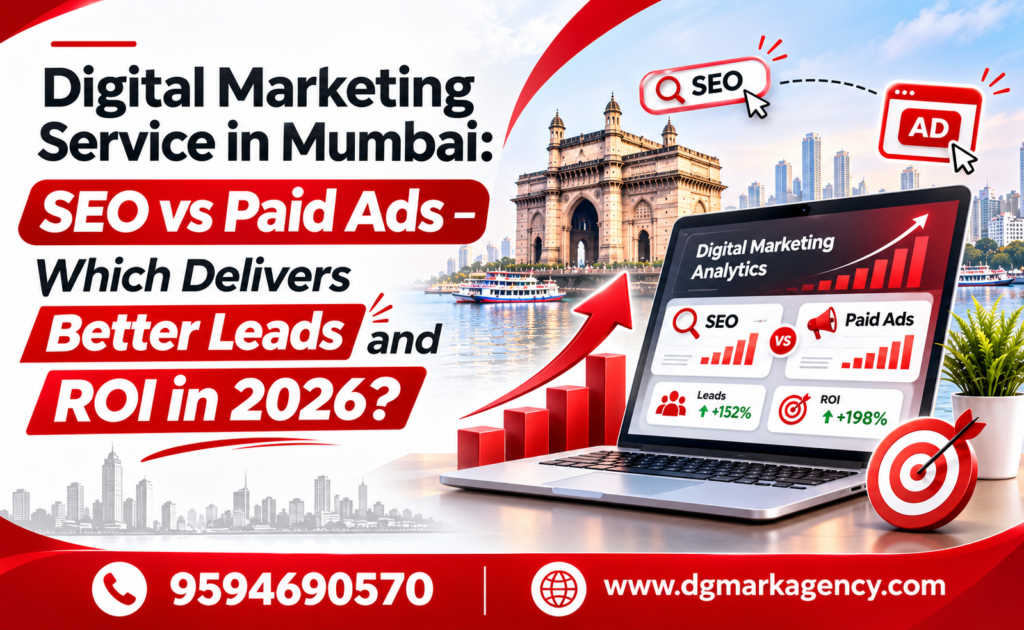
Search Engine Optimization (SEO) and paid advertising are two powerful approaches to digital marketing. SEO focuses on improving website visibility in organic search results, helping potential customers discover relevant products and services. Paid advertising, including Google Ads and Meta Ads, allows businesses to reach selected audiences through sponsored campaigns. Both strategies offer valuable opportunities, but their effectiveness depends on business objectives, customer behaviour, competition, and marketing performance.
For companies searching for a reliable digital marketing company in Mumbai, the objective should extend beyond increasing website traffic or advertising impressions. Successful digital marketing should generate genuine enquiries, attract customers with purchasing intent, and contribute to measurable business growth.
In 2026, AI-powered search experiences, changing customer expectations, local search behaviour, and automated advertising technologies are influencing how businesses approach online marketing. Customers increasingly expect relevant information, trustworthy brands, and convenient digital experiences before making purchasing decisions.
DGmark Agency offers digital marketing solutions covering SEO, Google Ads, social media marketing, and website development. This guide explains how SEO and paid advertising compare, which strategy supports better returns, and how Mumbai businesses can make informed decisions to strengthen their lead-generation performance.
What Is the Difference Between SEO and Paid Ads in Digital Marketing?
SEO and paid advertising are different methods of increasing online visibility and attracting potential customers. SEO involves optimizing a website’s content, technical structure, and relevance to improve its presence in organic search results. Paid advertising involves promoting products or services through sponsored placements on search engines and social media platforms. While SEO builds visibility through relevance and website optimization, paid advertising allows businesses to reach targeted audiences through managed promotional campaigns.
The major differences include:
- Traffic source: SEO generates visits through organic search results, while paid advertisements attract visitors through sponsored placements.
- Visibility timeline: SEO improvements usually develop gradually, whereas advertisements can appear after campaign approval.
- Targeting options: SEO focuses on matching search intent, while paid advertising offers additional audience and location targeting.
- Content requirements: SEO depends on valuable website information, while advertisements require persuasive promotional messages.
- Long-term value: Optimized pages may continue generating visitors, while advertising visibility generally requires continued expenditure.
- Campaign control: Paid advertising allows quicker adjustments to targeting, creative content, and promotional objectives.
Both strategies can support business growth when implemented effectively. SEO helps establish a stronger organic presence, while paid advertising provides flexibility for reaching potential customers through specific promotional activities.
SEO vs Paid Ads: Which Is Better for Mumbai Businesses in 2026?
Choosing between SEO and paid advertising depends on business requirements rather than the popularity of a particular marketing channel. Mumbai businesses operate across industries with different customer behaviours, purchasing cycles, and competitive conditions. A healthcare provider, educational institute, manufacturing company, and retail brand may require entirely different approaches to customer acquisition. SEO can support businesses seeking long-term search visibility, while paid advertising can help companies promote selected services and reach audiences more quickly.
Important factors influencing the decision include:
- Business objectives: Identify whether the priority is immediate enquiries, brand awareness, or sustainable customer acquisition.
- Customer search behaviour: Understand how potential customers research and compare services.
- Industry competition: Evaluate the difficulty of reaching audiences through organic and paid channels.
- Business maturity: New companies may require different marketing priorities from established brands.
- Website performance: Ensure relevant pages provide useful information and convenient enquiry options.
- Marketing effectiveness: Compare channels using qualified enquiries, customer acquisition, and revenue contribution.
For many businesses, combining SEO and paid advertising offers greater flexibility than relying exclusively on one strategy. The appropriate balance depends on which activities contribute most effectively to commercial objectives.
How Does SEO Help Mumbai Businesses Generate Organic Traffic and Quality Leads?
SEO helps businesses connect with potential customers who actively search for information, products, or services online. A website containing relevant information, clear service descriptions, and useful content can become more discoverable for related search queries. For example, an industrial supplier in Mumbai may publish detailed product specifications and application guides to reach procurement professionals researching suitable materials. This approach supports organic discovery while helping potential customers understand whether the business meets their requirements.
Effective SEO practices include:
- Keyword research: Identify relevant informational, commercial, and transactional search queries.
- On-page optimization: Improve page titles, headings, descriptions, and website content.
- Technical SEO: Address crawling, indexing, mobile usability, and website performance.
- Local optimization: Strengthen relevance for customers searching within genuine service areas.
- Content development: Publish informative blogs, product guides, comparisons, and service pages.
- Website credibility: Provide accurate business details and useful evidence of expertise.
- Conversion optimization: Make contact information, enquiry forms, and service benefits easily accessible.
SEO becomes particularly valuable when businesses prioritize customer intent over general traffic volume. Attracting visitors who genuinely need a service can create better lead-generation opportunities than ranking for broad topics with limited commercial relevance.
How Do Google Ads and Meta Ads Help Businesses Generate Leads Faster?
Google Ads and Meta Ads provide opportunities to reach selected audiences without waiting for organic search visibility to develop. Google Search campaigns can appear when users search for relevant products or services, while Facebook and Instagram campaigns can introduce businesses through engaging images, videos, and promotional messages. These platforms support different stages of customer discovery, making them useful for businesses seeking greater exposure and enquiry opportunities.
Paid advertising can support lead generation through:
- Search targeting: Reach people actively looking for relevant products or services.
- Geographic targeting: Focus promotions on selected Mumbai locations and service areas.
- Audience selection: Use available targeting options to reach relevant customer groups.
- Promotional creatives: Communicate service benefits through persuasive advertisements.
- Lead forms: Encourage users to submit relevant contact details and enquiries.
- Conversion tracking: Measure valuable actions such as calls, bookings, and form submissions.
- Campaign testing: Compare advertising messages, landing pages, and audience responses.
For example, an educational institute may advertise admission-related searches through Google while showcasing training experiences on Instagram. However, faster visibility does not automatically guarantee profitable results. Campaign success depends on relevant targeting, customer intent, website quality, and effective lead follow-up.
SEO vs PPC: Which Digital Marketing Strategy Delivers Better ROI in 2026?
Return on investment helps businesses evaluate whether their marketing activities contribute sufficient financial value relative to the resources invested. SEO may create long-term opportunities when optimized website pages continue attracting relevant visitors. Pay-per-click advertising can provide quicker opportunities to reach commercially interested customers and evaluate campaign performance. However, neither strategy guarantees superior returns because profitability depends on conversion rates, industry competition, customer value, and marketing execution.
Businesses should evaluate the following indicators:
- Qualified leads: Enquiries that match the business’s ideal customer requirements.
- Conversion rate: The percentage of visitors completing valuable actions.
- Customer acquisition cost: The resources required to acquire paying customers.
- Sales conversion: The proportion of enquiries resulting in completed purchases.
- Customer lifetime value: The potential financial contribution from customer relationships.
- Revenue attribution: Sales reasonably associated with marketing activities.
- Campaign profitability: The financial results achieved after accounting for relevant expenses.
Businesses should avoid judging ROI through traffic or keyword rankings alone. The more effective strategy is the one that consistently generates valuable customers and contributes to sustainable profitability.
How Much Does SEO Cost Compared to Paid Advertising in Mumbai?
The investment required for SEO and paid advertising depends on several business-specific factors. SEO generally involves technical optimization, keyword research, content development, website improvements, and ongoing search performance monitoring. Paid advertising requires campaign planning, audience targeting, promotional creatives, landing-page optimization, and advertising management. Instead of comparing fixed service prices, businesses should evaluate the resources necessary to achieve their marketing objectives.
Factors influencing the required investment include:
- Market competition: Competitive industries may require more extensive marketing activities.
- Website condition: Technical problems and outdated content can increase optimization requirements.
- Keyword difficulty: Different commercial search terms involve varying levels of competition.
- Geographic targeting: Businesses targeting several locations may require broader planning.
- Content development: Informative and original website content supports SEO performance.
- Campaign complexity: Multiple advertising platforms require careful coordination.
- Conversion readiness: Landing-page quality and enquiry systems influence campaign effectiveness.
A digital marketing company in Mumbai can help businesses identify which activities deserve priority. Marketing decisions should focus on expected customer acquisition value rather than choosing a channel solely because its initial investment appears lower.
Is SEO or Google Ads More Cost-Effective for Small Businesses and Startups?
Small businesses and startups must often balance immediate customer acquisition with long-term digital growth. SEO can help establish a sustainable online foundation through optimized service pages, useful content, and location-relevant visibility. Google Ads can support earlier promotional exposure and allow businesses to test customer demand for selected products or services. The cost-effectiveness of either approach depends on how successfully marketing activities generate enquiries that become paying customers.
Startups can improve marketing efficiency through:
- Foundational SEO: Optimize essential website pages and relevant business information.
- Focused keywords: Prioritize specific commercial searches instead of overly broad terms.
- Local visibility: Target customers within genuine service locations.
- Targeted advertising: Promote selected services with clear customer demand.
- Landing-page improvements: Simplify enquiry forms and communicate benefits clearly.
- Lead qualification: Identify whether potential customers meet business requirements.
- Performance reviews: Expand activities based on measurable conversions and sales.
A startup may benefit from running focused advertisements while developing organic visibility. Over time, the business can adjust its priorities according to lead quality, customer acquisition, and overall marketing performance.
Which Generates More Qualified Leads: Organic SEO or Paid Advertising?
Qualified leads are potential customers who demonstrate genuine interest and meet the business’s requirements. SEO can attract relevant users through service-specific searches, comparison content, and informative website pages. Paid advertising can also generate valuable enquiries through carefully selected keywords and audience targeting. The quality of leads depends more on customer intent and conversion experience than on whether traffic originates organically or through advertisements.
Several factors influence lead quality:
- Search intent: Commercially focused queries often indicate stronger purchasing interest.
- Audience relevance: Accurate targeting helps reach suitable potential customers.
- Content usefulness: Clear information helps visitors evaluate available solutions.
- Landing-page relevance: The destination page should match customer expectations.
- Enquiry qualification: Relevant questions help identify serious prospects.
- Customer response: Timely communication improves opportunities for conversion.
- Sales tracking: CRM records help distinguish genuine business opportunities from unqualified enquiries.
Businesses should evaluate how many leads become actual customers instead of relying only on enquiry volume. A smaller number of relevant prospects can produce better business results than a larger number of unsuitable contacts.
How Long Does SEO Take to Show Results Compared to Google Ads?
SEO and Google Ads follow different performance timelines. SEO requires search engines to discover, understand, and evaluate website pages before ranking improvements can influence organic traffic. Results depend on website condition, search competition, content relevance, and ongoing optimization. Google Ads can begin generating impressions and visits after campaign approval, although profitable performance may require continued testing and adjustments.
The typical process involves:
- SEO assessment: Identify technical issues, keyword opportunities, and content gaps.
- Website optimization: Improve relevant pages, usability, and technical accessibility.
- Organic tracking: Monitor search impressions, visitors, and conversion trends.
- Content refinement: Update information according to search behaviour and customer needs.
- Advertising activation: Launch targeted campaigns with conversion measurement.
- Campaign evaluation: Analyze advertisements, enquiries, and customer actions.
- Performance improvements: Adjust targeting, messaging, and landing pages.
Businesses should not expect guaranteed SEO rankings within a fixed timeframe or immediate advertising profitability. A combined approach can support near-term promotional needs while building longer-term organic search opportunities.
Google Ads vs Meta Ads: Which Platform Is Better for Lead Generation in Mumbai?
Google Ads and Meta Ads help businesses reach customers through different digital experiences. Google Search advertising is useful for capturing demand from users actively searching for products or services. Meta Ads can generate interest through engaging social media content, helping businesses introduce offerings to selected audiences. The appropriate platform depends on whether customers typically search for solutions directly or discover brands through visual content and online engagement.
Important platform differences include:
- Customer intent: Google Search campaigns can reach users with specific service requirements.
- Audience discovery: Meta advertising can introduce products to people who may not be searching.
- Advertising formats: Search advertisements communicate relevant offers, while social campaigns emphasize visual engagement.
- Geographic targeting: Both platforms provide tools for reaching selected locations.
- Brand communication: Meta campaigns can showcase customer experiences and product features.
- Campaign optimization: Both platforms provide performance data for improving advertisements.
- Lead evaluation: Actual enquiries and sales determine commercial effectiveness.
For Mumbai businesses, platform selection should reflect industry characteristics and customer behaviour. Companies with strong search demand may prioritize Google Ads, while businesses offering visually engaging services may benefit from Instagram and Facebook advertising.
Should Mumbai Businesses Invest in Local SEO or Google Ads for Local Customers?
Local SEO and geographically targeted Google Ads can help businesses reach customers within specific service areas. Local SEO strengthens discoverability through accurate business information, relevant website content, and Google Business Profile optimization. Google Ads provides additional promotional visibility through location-targeted campaigns. These strategies are particularly useful for businesses serving neighbourhoods such as Andheri, Borivali, Bandra, Goregaon, Malad, and Colaba.
Important local marketing practices include:
- Business profile optimization: Maintain accurate business details and relevant categories.
- Location-based keywords: Address searches connected to genuine service areas.
- Service-specific content: Explain products and services available to local customers.
- Customer reviews: Encourage authentic feedback and respond professionally.
- Mobile optimization: Make business information accessible on mobile devices.
- Geographic advertising: Focus campaigns on suitable locations.
- Local conversion tracking: Evaluate enquiries and customers from relevant areas.
Businesses should prioritize genuine local relevance rather than creating repetitive content for every neighbourhood. Combining local SEO with targeted Google Ads can support both organic discovery and promotional visibility.
What Are the Advantages and Disadvantages of SEO vs Paid Advertising?
SEO and paid advertising provide different advantages and limitations that influence marketing decisions. SEO supports organic search visibility, useful content development, and opportunities for long-term customer acquisition. However, organic performance may fluctuate because of competition and search algorithm changes. Paid advertising offers greater control over promotional campaigns and targeting, but visibility generally depends on continued advertising investment.
The main advantages and limitations include:
- SEO advantage: Relevant pages may continue attracting visitors over time.
- SEO advantage: Informative content can support brand credibility and customer education.
- SEO advantage: Organic discovery reduces dependence on individual paid clicks.
- SEO limitation: Competitive rankings may require sustained optimization.
- SEO limitation: Rankings and traffic levels cannot be guaranteed.
- Paid advertising advantage: Campaigns can reach eligible users relatively quickly.
- Paid advertising advantage: Targeting and messaging can be adjusted according to performance.
- Paid advertising limitation: Poor targeting may generate irrelevant enquiries.
- Paid advertising limitation: Promotional visibility usually decreases when campaigns stop.
A balanced marketing strategy recognizes these trade-offs. Businesses should choose an appropriate combination based on customer acquisition requirements and measurable performance rather than relying on a single digital channel.
How Can Businesses Measure ROI from SEO and Paid Advertising Campaigns?
Measuring ROI requires connecting marketing activities with meaningful business outcomes. Website traffic, keyword impressions, and advertising clicks provide useful information about visibility, but they do not establish profitability. Businesses should track qualified enquiries, customer acquisitions, sales performance, and the resources associated with generating those results. Accurate measurement helps determine which marketing activities contribute to sustainable growth.
Important performance indicators include:
- Organic conversions: Valuable actions generated through unpaid search traffic.
- Paid conversions: Enquiries and sales associated with advertising campaigns.
- Qualified lead rate: The percentage of enquiries meeting customer requirements.
- Customer acquisition cost: Resources used to acquire paying customers.
- Sales conversion rate: The proportion of leads becoming actual customers.
- Return on ad spend: Advertising-attributed revenue relative to advertising expenditure.
- Marketing ROI: Financial returns compared with associated investment.
- Customer lifetime value: The estimated contribution from acquired customers.
Businesses can use Google Analytics 4, Google Search Console, advertising dashboards, and CRM systems to monitor these indicators. Comparing actual customer outcomes rather than isolated marketing statistics helps improve investment decisions.
Can SEO and Paid Ads Work Together to Increase Leads and Conversions?
SEO and paid advertising can complement each other by supporting different customer needs throughout the purchasing journey. SEO helps businesses provide useful information and become discoverable through relevant searches. Paid advertising can promote selected services, test commercial demand, and reach targeted audiences. When coordinated effectively, insights from both channels can support better content planning, campaign targeting, and conversion optimization.
Businesses can integrate both strategies through:
- Shared keyword research: Identify relevant searches for organic and paid campaigns.
- Search intent mapping: Separate informational queries from commercial requirements.
- Landing-page optimization: Improve pages for relevance, usability, and enquiries.
- Paid keyword testing: Identify commercial search terms generating valuable conversions.
- SEO content development: Address customer questions through useful website resources.
- Remarketing: Reconnect with eligible audiences through targeted promotional messages.
- Consistent branding: Maintain clear communication across different channels.
- Unified reporting: Compare leads, customer acquisition, and sales performance.
For example, a professional service provider may publish detailed educational guides while running Google Search campaigns for quotation-related queries. Together, these activities can help customers discover the business and make informed purchasing decisions.
How Are AI Search, AEO, and GEO Changing SEO and Paid Advertising in 2026?
Artificial intelligence is influencing how customers discover information and evaluate businesses online. AI-assisted search experiences can present summarized answers and help users explore different solutions. This has increased interest in Answer Engine Optimization (AEO), Generative Engine Optimization (GEO), and AI-oriented optimization (AIO). These concepts emphasize making digital content informative, accessible, and relevant to user questions. However, traditional SEO fundamentals remain important for search discoverability.
Businesses can adapt through the following practices:
- Question-based content: Address relevant customer searches through descriptive headings.
- Direct answers: Explain topics clearly without unnecessary complexity.
- Original expertise: Publish information reflecting genuine industry knowledge.
- Content structure: Organize pages logically for readers and search engines.
- Entity clarity: Clearly identify products, services, businesses, and locations.
- Technical accessibility: Maintain crawlable and well-structured website pages.
- Local relevance: Explain accurate service coverage and customer requirements.
- Content accuracy: Review business information and important claims regularly.
AEO and GEO should strengthen the usefulness of website content rather than replace established SEO strategies. Businesses should focus on accurate information and meaningful customer experiences instead of expecting AI-related techniques to guarantee rankings or visibility in generated answers.
How Should Mumbai Businesses Divide Their Digital Marketing Budget Between SEO and Paid Ads?
Marketing resource allocation should depend on business objectives, existing digital performance, industry competition, and customer acquisition priorities. There is no universal distribution suitable for every Mumbai business. Startups may need immediate advertising exposure, while established companies may prioritize expanding organic visibility. Businesses should review performance regularly and allocate resources toward activities that demonstrate meaningful commercial value.
Important allocation factors include:
- Business objectives: Determine whether immediate enquiries or long-term growth is the priority.
- Existing visibility: Evaluate current organic traffic and relevant keyword performance.
- Advertising outcomes: Review campaign-generated leads and customer acquisition.
- Industry competition: Understand challenges across organic and paid search.
- Customer behaviour: Identify how audiences research and compare offerings.
- Website readiness: Ensure landing pages communicate services effectively.
- Profitability: Focus on activities generating valuable customers.
- Continuous review: Adjust priorities based on reliable conversion data.
A professional digital marketing company in Mumbai can help businesses evaluate marketing priorities and develop a strategy suited to their growth objectives. Successful allocation should reflect measurable outcomes rather than arbitrary percentages.
How Do You Choose the Right Digital Marketing Agency in Mumbai for SEO and Paid Ads?
Selecting the right digital marketing agency requires evaluating its strategic capabilities, understanding of customer acquisition, and approach to performance measurement. A reliable agency should explain how organic search, advertising campaigns, website quality, and lead conversion contribute to business growth. Businesses should prioritize transparent communication, realistic expectations, and strategies tailored to their industry rather than relying on promotional guarantees.
Important selection criteria include:
- SEO expertise: Knowledge of technical optimization, keyword research, and content strategy.
- Advertising capabilities: Experience managing Google Ads and Meta Ads campaigns.
- Industry understanding: Awareness of relevant customer behaviour and purchasing patterns.
- Website optimization: Ability to improve landing pages and enquiry experiences.
- Performance reporting: Clear measurement of qualified leads and customer acquisition.
- Strategic planning: Recommendations aligned with specific business goals.
- Communication: Transparent explanations of campaign activities and improvements.
- Integrated marketing: Coordination between SEO, paid advertising, and website development.
An effective agency should focus on meaningful business results rather than simply increasing impressions or traffic. The right marketing partner helps businesses make informed decisions using relevant performance information.
Why Choose DGmark Agency for SEO, Paid Advertising, and Lead Generation Services in Mumbai?
DGmark Agency offers digital marketing services designed to help businesses improve online visibility, reach relevant audiences, and strengthen customer acquisition opportunities. As a digital marketing company in Mumbai, DGmark Agency provides solutions covering search engine optimization, paid advertising, social media marketing, and website development. These services allow businesses to coordinate different marketing activities according to their target customers and commercial objectives.
DGmark Agency’s services include:
- Search Engine Optimization: Improving website relevance and organic search discoverability.
- Local SEO: Strengthening visibility for relevant location-based searches.
- Google Ads: Developing targeted advertising campaigns focused on business enquiries.
- Meta Ads: Promoting products and services through Facebook and Instagram.
- Social Media Marketing: Supporting audience engagement and brand communication.
- Website Development: Creating accessible websites that support customer enquiries.
- Content Marketing: Developing informative content aligned with customer needs.
- Lead Generation: Coordinating marketing activities to attract relevant prospects.
- Performance Optimization: Reviewing available campaign information to identify improvement opportunities.
DGmark Agency’s integrated service offerings can help businesses develop a coordinated digital marketing approach rather than treating SEO and advertising as unrelated activities. Companies looking to improve search visibility, explore paid campaigns, or strengthen their lead-generation process can benefit from evaluating strategies aligned with their business objectives.
Frequently Asked Questions (FAQs)
1. Is SEO better than paid advertising for Mumbai businesses in 2026?
SEO can be suitable for businesses seeking long-term organic visibility, while paid advertising supports faster promotional exposure. The better approach depends on customer intent, business goals, competition, and conversion performance.
2. Which generates more qualified leads, SEO or Google Ads?
Both can generate qualified leads when keywords, targeting, and landing pages align with customer requirements. Businesses should compare actual customer acquisitions rather than judging results only by enquiry volume.
3. Can small businesses in Mumbai generate leads without paid advertising?
Yes. Small businesses can attract potential customers through organic SEO, useful service content, location-relevant pages, and Google Business Profile optimization. However, results depend on competition and ongoing optimization.
4. Is Google Ads effective for startups in Mumbai?
Google Ads can help startups test demand and reach relevant customers through targeted search campaigns. Its effectiveness depends on keyword selection, landing-page quality, conversion tracking, and commercial relevance.
5. How does local SEO help businesses attract nearby customers?
Local SEO improves relevance for location-based searches through accurate business information, useful website content, and Google Business Profile optimization. It can support customer discovery within genuine service areas.
6. Does running paid advertising improve organic SEO rankings?
No. Paid advertisements do not directly improve organic Google rankings. However, advertising data can provide useful insights into customer demand, relevant keywords, and conversion opportunities.
7. Should Mumbai businesses combine SEO and PPC marketing?
Combining both can be useful when businesses want to support immediate advertising opportunities alongside longer-term organic visibility. The appropriate balance depends on marketing objectives and customer acquisition performance.
8. What is the best way to measure SEO and paid advertising ROI?
Businesses should track qualified enquiries, customer acquisition, attributable revenue, and associated marketing investment. Connecting analytics with sales data provides a clearer understanding of profitability.
9. Will AI-powered search replace traditional SEO in 2026?
AI-powered search is changing how information is presented, but established SEO practices remain relevant. Useful content, technical accessibility, accurate business information, and clear answers continue to support discoverability.
10. Why should businesses choose DGmark Agency for digital marketing services?
DGmark Agency provides SEO, Google Ads, Meta advertising, social media marketing, and website development services. Its integrated offerings can support businesses seeking stronger online visibility and relevant lead-generation opportunities.
Conclusion
SEO and paid advertising offer different advantages for Mumbai businesses seeking quality leads and stronger marketing returns in 2026. SEO helps develop long-term organic search visibility and customer trust, while paid advertising supports targeted promotion and faster opportunities to reach potential customers. Businesses should evaluate both approaches according to customer intent, lead quality, conversion performance, and commercial profitability rather than relying on traffic volume alone.
DGmark Agency helps businesses explore coordinated marketing strategies through SEO, Google Ads, Meta advertising, and website development. As a digital marketing company in Mumbai, DGmark Agency supports companies seeking stronger online visibility and meaningful customer acquisition opportunities. By balancing organic search development with relevant paid advertising and ongoing performance evaluation, businesses can make more informed marketing decisions and support sustainable digital growth.
Contact DGmark Agency Today!
DGmark Agency – Best Digital Marketing Agency in Andheri, Mumbai
Address– 405, 4th Floor, Pratik, Ratan Nagar Apartment-B Wing, Bus Stop, Near, Apna Bazar Rd, opp. Dhake Colony, D.N.Nagar, Andheri West, Mumbai, Maharashtra 400053
Phone no. – 9594690570
Website: https://dgmarkagency.com/